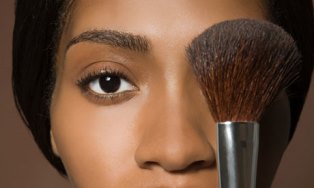
As someone who does not wear make-up often, I was hesitant to write on this issue but realised that the inside knowledge of a Make-up Artist is not required here; so please read on :-). I came across an article in Pride Magazine recently, with the title: ‘Are make-up companies doing enough to cater for black skin tones?’ In my head I said no straight away, and went on to read the anecdotal article where the writer could not understand why it was always a challenge to find make-up shades for her brown skin, but her white friends had a plethora of choices: The writer recollects the common phrase shop assistants would use, ‘Yes, we go quite dark in our foundations’.
You may say, ‘isn’t this and old issue?’ The answer to that is yes, it was even covered in a Guardian article in 2011, but not much has changed. There has been some improvement though, but probably not enough.
Something similar happened to me recently when I went to buy some Tea Tree body wash from the Body Shop. Yes, I went to buy body wash and a shop assistant was trying to sell me make-up (that’s always the way I guess).
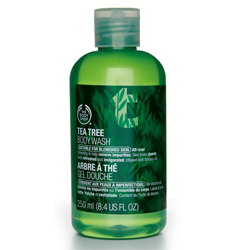
Despite being taken over by L’Oreal in 2006 for over £650 million; I have always liked the Body Shop’s humble beginnings in West Sussex, England; including its all-natural / care for the environment ethos. So, as I went to buy this body wash, containing tea tree naturally sourced from Kenya, I was approached by a very nice shop assistant who was explaining all the benefits of their Tea Tree brand. Somehow she got onto talking about new make-up / foundations they had in store and how good it was. The moment she did this I said to myself:
- I only came in here for some body wash!
- I have never bought make-up from the Body Shop and they have never sold (to my knowledge) foundations for women with dark brown skin.
- I don’t even wear foundation lol
The shop assistant was very pleasant, so I listened politely and let her finish; when she did, I simply asked, ‘do any of these foundations come in a shade that matches my skin tone, i.e., something that Naomi Campbell could wear’. The shop assistant was standing in front of me and could see the colour of my skin, but I just wanted to emphasize by dropping in Naomi Campbell’s name :-). She paused….. I was hoping that she would be honest with me and not walk me over to the counter and pull out a shade that was obviously not a match to me.
‘Well, I’m afraid all we have are lighter versions but I think we are planning to do some darker shades soon.’
I smiled, ‘that’s OK, thanks’, and walked to the counter, paid for my Tea Tree body wash and left. I actually found the situation quite funny. The shop assistant was really nice and was so enthusiastic about her job; after all she is not the problem.
Just like everyone else, I am susceptible to advertising. I was on my high horse for a while and thought that I wasn’t but I am. It was an advert for Maybelline’s eye shadow and model Jessica White, who is similar in complexion to me (depending on which air-brushed photo of her you look at), was wearing the eye shadow.
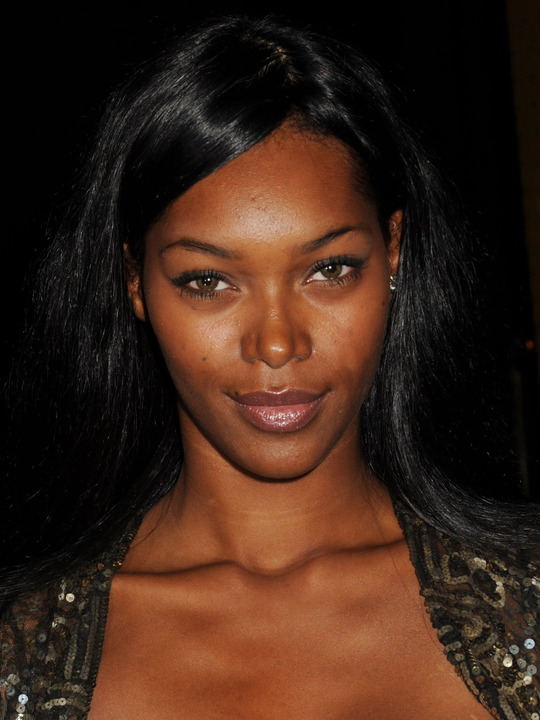
I liked the colours, but when I saw it on her I had a visual blue print of what it could look like on me and I actually went out and SEARCHED for this eye shadow! I had succumbed to brand advertising (I am hanging my head in shame, just remembering this lol).
The article went on to say that established brands such as L’Oreal, Revlon and YSL (which I found out, is part of the L’Oreal corporate group) should do more to cater for darker skin tones.
I actually disagree with this; in an ideal world it would be nice to have a level playing field but that is not the case in many aspects of life. These top brands and others have been around for years! L’Oreal was founded in Paris 104 years ago, and their UK franchise has been around since 1932. If L’Oreal wanted to develop make-up for darker skin tones then it would have, it had plenty of time to do so! I think that brands catering for a wider variety of ethnic skin tones should be allowed to thrive and we should stop begging other well-established brands to develop make-up for ethnic skin tones. As I said before if these companies wanted to, they would. They have all the expertise and the money to develop a diverse range of make-up products, which they can sell (no one is asking them to give their products away for free!) and generate revenue. In my opinion, they obviously can’t be bothered, as the market is apparently not big enough (if that is true, haven’t they heard of niche marketing?!). So for the brands that can be bothered, I wish them the best of luck and look forward to seeing greater competition in the make-up market. At the end of the day competition is a key ingredient of commerce and make-up in any shade is big business!

Some of the brands that can be bothered:
Black UP
Bobbi Brown
Fashion Fair
Illamasqua
Iman
MAC
Nars
Sleek

double*a*ad : AdelinA
Featured image: www.jupiterimages.com


 Jeitent Content Marketing
Anything to say? write it here!